“Embracing our vulnerabilities is risky but not nearly as dangerous as giving up on love and belonging and joy—the experiences that make us the most vulnerable. Only when we are brave enough to explore the darkness will we discover the infinite power of our light.” -Brené Brown


Get practices, tips, and special offers delivered straight to your inbox.
I provide high-quality mental health care rooted in science, compassion, and understanding for adults, children, couples, and families.
I provide in-person counseling in a warm and welcoming environment, offering personalized support to help you navigate life’s challenges and foster emotional well-being.
Through virtual sessions, I provide flexible and accessible counseling, helping you overcome obstacles, enhance your well-being, and achieve your therapeutic goals.


Are you feeling isolated from others and disconnected from yourself? Do you long to experience joy and a sense of belonging again?
If so, you’ve come to the right place. Together, we can work to help you rebuild relationships, moving you from merely surviving to truly thriving. By uncovering the purpose of your emotions, thoughts, and body sensations, you will learn to effectively meet your needs and live authentically.
I welcome individuals from diverse spiritual and religious backgrounds. I strive to foster an atmosphere where you can openly discuss your beliefs without fear of judgment or pressure. Your beliefs are an integral part of who you are, and I am here to support you in exploring your thoughts and feelings in a way that aligns with your values.

Trust and confidentiality form the foundation of the therapy process. Establishing a safe and non-judgmental space is essential for you to feel comfortable opening up and sharing your thoughts and emotions. As a therapist, I prioritize your privacy and adhere to strict professional ethics, ensuring that your personal information remains confidential. Building trust allows for deeper exploration, meaningful connection, and effective collaboration towards your healing journey
Empathy and understanding are integral aspects of the therapeutic relationship. I strive to create an empathetic and compassionate environment where you feel heard, validated, and truly understood. By deeply listening and acknowledging your experiences, emotions, and perspectives, I aim to foster a sense of trust and create a therapeutic alliance that supports your growth and healing. Through empathy, we can explore your challenges, gain insight, and work towards meaningful change.
Therapy is a collaborative process tailored to your unique needs and goals. Together, we’ll explore your concerns, strengths, and aspirations, developing a personalized treatment plan that aligns with your specific circumstances. I will provide guidance, evidence-based interventions, and practical tools to help you navigate challenges, promote self-discovery, and foster positive change. Through our collaborative efforts, we’ll work towards enhancing your well-being and empowering you to lead a more fulfilling life.

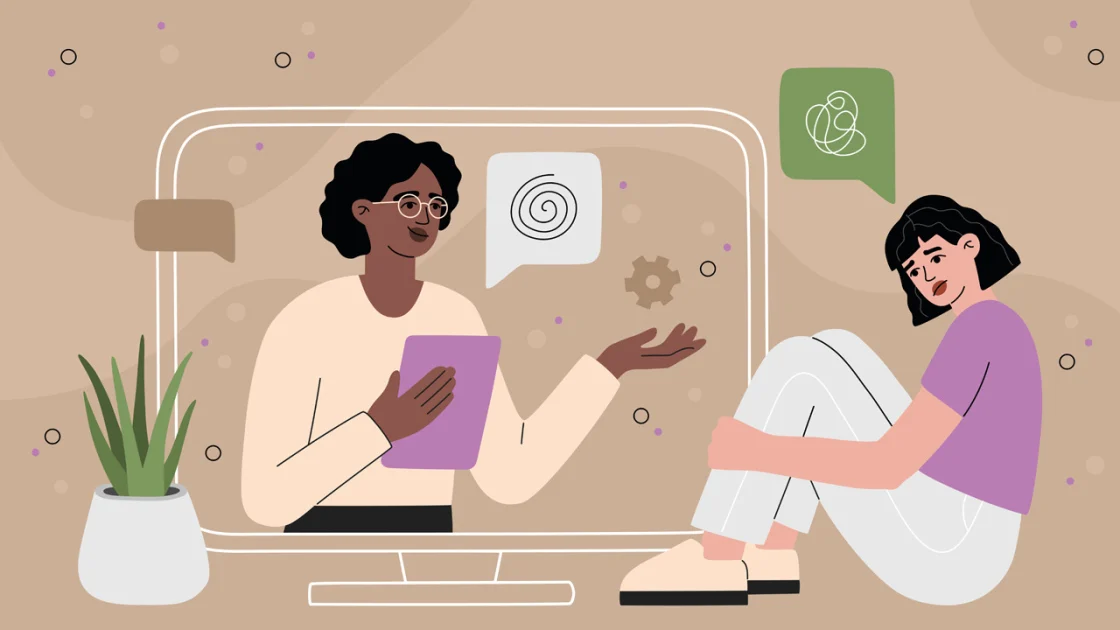
I understand that finding the right support can be challenging, especially when juggling time constraints or transportation issues. If you’re feeling the need for connection and support but are stuck due to these barriers, online therapy offers a convenient and effective solution.
Online therapy allows you to connect with a qualified therapist who is the right fit for you, all from the comfort and privacy of your own home. This flexibility means you can prioritize your mental well-being without adding extra stress to your schedule. My goal is to provide accessible support as you navigate life’s stressors.
If you’re interested in learning more about how online therapy can benefit you, please don’t hesitate to reach out or schedule a free discovery call. I’m here to help you find the support you need.

Individual counseling provides personalized and confidential support to help individuals improve their mental health and achieve personal growth goals, offering them the tools and skills they need to navigate life’s challenges and improve their overall well-being.

Family counseling creates a supportive environment for families to address and overcome interpersonal challenges. By examining dynamics within the family unit, this collaborative approach aims to enhance communication, resolve conflicts, and strengthen relationships. The goal is to foster a healthier family dynamic, promoting resilience and harmony through open communication and understanding.

Trauma-informed care offers a safe and compassionate space for individuals to heal, grow, and reclaim their lives. With our trauma-informed approach, We prioritize understanding the impact of trauma and provide tailored support to promote healing and resilience.
Codependence is often misunderstood. It is not a character defect, but rather a coping strategy many individuals develop to manage unmet emotional needs experienced in childhood. For many, a core belief is formed that the only path to feeling loved is by being "needed." This drives the prioritization of others' needs over their own, which acts as a substitute for authentic connection and genuine love. This pattern often results in deep loneliness, a persistent feeling of being "too much" or "not enough," and resentment from constantly giving without receiving the care they offer to others. If this description resonates with your experience, please know that hope for change is absolutely available. By learning to approach yourself with compassionate curiosity, you can begin to release what is beyond your control, heal past wounds, and start attracting mutually supportive and healthy relationships.
As a highly sensitive person (HSP) myself, I deeply understand the stigma associated with sensitivity in many Western cultures. I also recognize the vital importance of finding effective strategies to protect one's sensitivity in an often overstimulating world. I genuinely believe that there is no such thing as being "too sensitive." Instead, the key is how we understand and nurture our sensitivity, allowing it to serve as the gift that it truly is. Sensitivity grants us access to greater creativity, compassion, and curiosity, enabling us to experience life with a deep connection to the world around us.By healing the wounds caused by misguided stigma, you can begin to understand your unique personality in a positive and empowering context.
As a parent myself, I understand that raising children is a journey filled with both immense joy and difficult challenges. The pursuit of "perfect parenting" is unrealistic; the very fact that you are engaging with this information suggests you are already a dedicated parent committed to fostering a strong relationship with your children.Positive Discipline is a parenting framework designed to honor this commitment. It focuses on strategies that actively support the healthy development of the parent-child bond. This approach emphasizes mutual respect, the fostering of essential life skills, and a communication style that is both kind and firm, ensuring it meets a child's unique developmental needs.
In my experience, "spirituality" can be a loaded term. Depending on an individual's background, it might evoke something deeply sacred or, conversely, a system of control. I define spirituality simply as a connection to something we cannot physically see but whose effects we experience. In my practice, I meet you wherever you are on your spiritual journey, always emphasizing personal choice. My goal is to help you access aspects of spirituality that serve as a resource for you, and to heal from any wounds you may have experienced in religious or spiritual communities where spirituality was used as a tool for control.
Have you ever felt overwhelmed by the pace of life, struggling to keep up? While stress is an unavoidable part of the human experience, prolonged exposure without relief can have significant long-term negative impacts. These can include interrupted or poor-quality sleep, frequent illnesses, bodily pain, digestive issues, forgetfulness, and challenges in relationships, among others.
The good news is that there's a path forward. Trauma-Informed Yoga offers effective tools to regulate your nervous system, allowing you to navigate waves of stress and find a greater sense of calm.
When unthinkable events occur, our natural instinct is to survive. My training in complex trauma has taught me that resilience is the process of moving forward after such experiences, allowing us to grow into the people we aspire to be.
Through Eye Movement Desensitization and Reprocessing (EMDR) therapy, I can help you transform your relationship with intense traumatic memories that have contributed to negative beliefs about yourself and the world. Trauma-informed yoga and other somatic approaches offer strategies to stay present, release tension stored in the body from trauma, and ultimately feel at home within yourself again.
Additionally, tools from Internal Family Systems can help you understand the purpose different emotional parts of yourself played in your survival through trauma, fostering a more compassionate relationship with yourself.
While we are not to blame for the harm inflicted upon us, we do have a responsibility to engage in the healing process. This path can seem unfair, but by acknowledging the darkness of the past and allowing yourself to feel your emotions, you can move towards empowerment and reclaim control from the past.
As a mother of two, I understand that birth can be a powerful and transformative experience, yet for many, it can also be traumatic. Our identity fundamentally shifts when we become parents, experience infertility, or face the death of a child.
I am a trauma-informed yoga therapist with specialized training in prenatal and postnatal yoga. I have had the privilege of walking with many women through this journey, both in my yoga classes and in therapy. The physiological changes that occur during different stages of womanhood, such as prenatal, postnatal, and menopause, can also bring about body image concerns, often influenced by media portrayals and societal norms. Trauma-Informed Yoga can help heal our relationship with our bodies, fostering self-love and gratitude for their capabilities, regardless of shape or size.
Additionally, for many, the monthly cycle significantly impacts mood, energy levels, and relationships. My background in integrative health has guided me through these changes, and I feel empowered to support others through this process. I can also coordinate care with alternative medicine providers to help you regain a sense of comfort in your body.
Anxiety has always played a necessary role in protecting us from perceived threats. However, much like a smoke alarm triggered by burnt toast, our bodies can sometimes struggle to differentiate between a genuine threat in the present moment and a memory of a threatening experience from the past.
Therapy offers effective ways to train your brain and body to use anxiety for its intended purpose—prompting necessary safety measures—and to calm your system when no actual threat is present.
If you have a specific, long-standing fear, such as phobias related to spiders, cars, or airplanes, Eye Movement Desensitization and Reprocessing (EMDR) is highly effective. This approach helps rewire neural pathways so you can distinguish between current threats and past memories, reducing fears that keep you from engaging fully in daily life.
For anxiety that is more generalized or social in nature, Trauma-Informed Yoga provides a beneficial strategy. Through breathing techniques, movement, and meditation, this practice can help you regain a calm mind and body. This supports maintaining connection under stress to the parts of your brain responsible for social connection and effective problem-solving so that you can make decisions that align with your values and needs.
If you are struggling with overwhelming sadness, difficulty getting out of bed, or persistent negative thoughts about yourself and your future, you may be experiencing symptoms of depression. Feeling unable to connect to a sense of meaning is common in depression, which, in some ways, can act as a protective mechanism when the perceived risks of engaging with the world feel too high.
Therapy offers a supportive path to address these feelings and rekindle hope. By taking small, compassionate steps, you can begin to reconnect with yourself and find meaning again by clarifying and connecting to what you truly value.
Many individuals who have experienced hurt in a relationship often believe that forgiveness is impossible unless the person who caused the harm acknowledges their actions. However, forgiveness is not about the wrongdoer; rather, it is about empowering the person who was harmed to release the hold that the painful event has on their present life.
Importantly, forgiving someone does not require that the person who caused the harm "deserves" forgiveness. Furthermore, forgiveness does not obligate the person who was harmed to maintain or resume a relationship with the individual who hurt them. Instead, forgiveness is a process that allows those affected by harm to reclaim their sense of agency and move forward, independent of the other person's actions or involvement. Through therapy, you can learn to connect to your own hurt with compassion so that you can move forward.
Did you know that everyone experiences some form of dissociation every seven to eleven minutes? Dissociation exists on a spectrum.
On the less extreme end, dissociation is a common experience, such as driving a familiar route on autopilot and realizing you weren't actively thinking about the directions. On the other end, dissociation serves as a survival strategy to protect us from intense pain or trauma by disconnecting us from our bodies and environment, allowing us to function in daily life.
Individuals who rely on this type of extreme dissociation may find themselves losing time, struggling to recall significant life events, or feeling detached and confused by familiar surroundings or relationships.
Take the first step by calling me or filling out the online form. I’m here to assist you in scheduling a free consultation where we can discuss your needs, answer any questions you may have, and determine if my services are the right fit for you.
Once you’ve reached out, we’ll work together to find a convenient time for your complimentary consultation. During this session, we’ll get to know each other, explore your therapeutic goals, and ensure that we are a good match to support your unique needs.
After the consultation, if you feel comfortable and ready to proceed, we’ll schedule your first therapy session. Together, we’ll delve into your concerns, develop a personalized treatment plan, and embark on a journey towards growth, healing, and well-being.
Insurance Plans We Accept